
How Does a SIP Work? A Beginner’s Guide to Systematic Investment Plans in India

SIPs are popular because they turn investing into a habit and let you start with a modest amount. But they are often misunderstood as a guaranteed way to grow money. This article explains the mechanics in plain language, shows an illustration with clearly assumed returns, and lists the risks and the checks to make before you begin. It is educational content, not investment advice. Consider speaking to a SEBI-registered investment adviser.
Key takeaways
- A SIP is a method of investing, not a product. The returns depend on the fund you choose.
- Regular investing smooths the price you pay over time, but it does not remove the risk of loss.
- Match the fund type to your goal and time horizon: longer goals can accept more market risk.
- Keep an emergency fund first. See how much emergency fund you need.
How does a SIP work step by step?
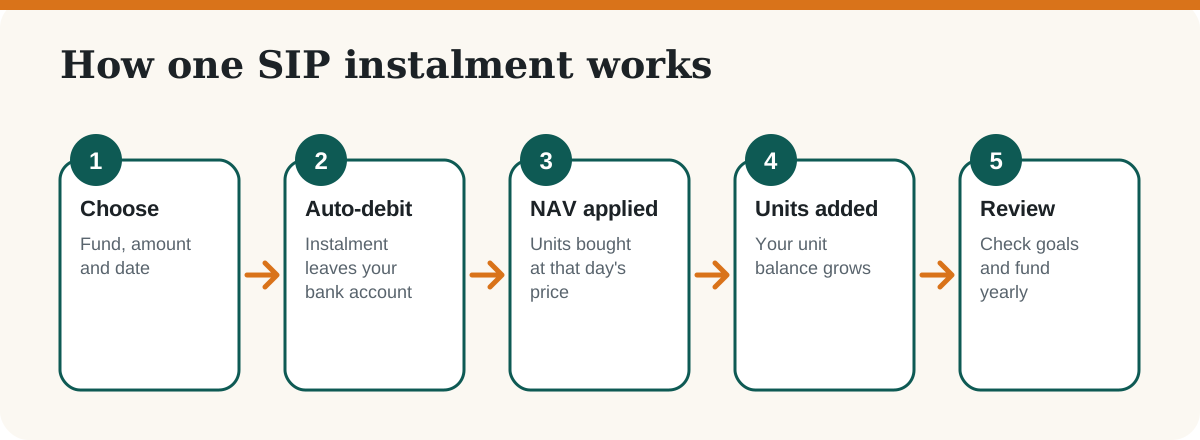
You choose a mutual fund scheme, an amount and a date. On that date the money is debited automatically, and the fund house allots units at the day’s NAV (net asset value per unit). Over time you accumulate more units. When you redeem, you receive the value of your units at the redemption-day NAV, minus any applicable exit load and taxes.
What is rupee cost averaging?
Rupee cost averaging means your fixed instalment buys more units when the NAV is low and fewer when it is high. That can bring down your average cost per unit compared with investing everything at a peak. It does not guarantee a profit or protect you in a long falling market.
| Month | Instalment | NAV (assumed) | Units bought |
|---|---|---|---|
| 1 | ₹5,000 | ₹50 | 100 |
| 2 | ₹5,000 | ₹40 | 125 |
| 3 | ₹5,000 | ₹62.50 | 80 |
| Total | ₹15,000 | Average cost: ₹49.18 | 305 |
In this made-up example the average cost per unit is ₹15,000 divided by 305 units, which is about ₹49.18, a little lower than the simple average NAV of ₹50.83.
What could ₹5,000 a month become? An illustration
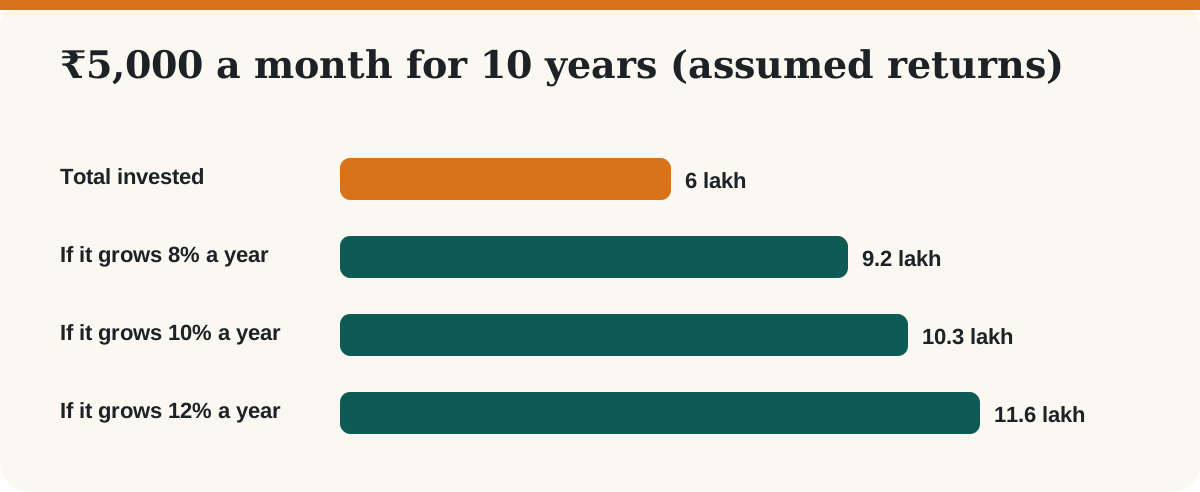
These figures are calculated with a standard future-value formula assuming a constant annual return, monthly investing at the start of each month and no taxes or costs. Real markets are not smooth: returns will differ each year, and in some periods you can lose money. Do not treat any assumed return as a forecast or promise.
What are the risks of a SIP?
- Market risk: equity and debt fund values go up and down.
- Fund choice risk: a poor or mismatched fund can underperform.
- Behaviour risk: stopping a SIP in a market fall can lock in losses.
- Cost risk: high expense ratios reduce returns; compare direct and regular plans.
- Liquidity and tax: exit loads and tax rules can apply, and they change.
How do you start a SIP safely?

For a broader introduction, read how to invest money. To plan monthly cash flow first, use the 50/30/20 budget rule, and compare tax-saving options in PPF vs ELSS vs NPS.
Frequently asked questions
What is a SIP in mutual funds?
A systematic investment plan lets you invest a fixed amount in a mutual fund at regular intervals, usually monthly, through automatic debit.
Are SIP returns guaranteed?
No. Returns depend on the fund and the market. Mutual fund investments are subject to market risks, so read all scheme related documents carefully.
What is the minimum amount for a SIP?
Many funds allow small monthly amounts, but minimums differ by scheme. Check the scheme document.
Can I stop a SIP anytime?
Usually yes, but check the fund’s terms for any exit load on redemption. Stopping in a market fall can lock in losses, so consider your goal first.
Is SIP better than lump sum investing?
Neither is always better. SIPs suit regular income earners and reduce the risk of investing everything at a peak. A lump sum may suit people who have a large amount and a long horizon, and it carries timing risk.
How do I choose a mutual fund for a SIP?
Start with your goal and time horizon, then check the fund category, risk level, costs and track record. A SEBI-registered investment adviser can help with personal advice.
Sources
Last checked: October 2026. This article is educational and not investment advice. Mutual fund investments are subject to market risks, read all scheme related documents carefully. Past performance does not indicate future results. Illustrations use assumed returns.