Air Pollution in Indian Cities: What Actually Reduces Your Exposure
This article gives general information and is not medical advice. If you are worried about your health, speak to a qualified doctor. In India, Tele-MANAS offers a free 24-hour mental health helpline on 14416.
The biggest reductions in personal exposure come from indoor air, because that is where most people spend most of their hours. You cannot change your city’s air quality, but you can substantially change the air in the two rooms where you sleep and work — and since exposure is concentration multiplied by time, improving eight hours of sleeping air matters more than optimising a thirty-minute commute.
That framing is more useful than the usual advice, which tends to focus on outdoor masks and leaves people feeling they can do nothing. The honest position sits in between: individual measures do not solve a public problem, and they do measurably reduce what you personally breathe. Both things are true.
This is general information. If you or a family member has asthma, COPD, heart disease or is pregnant, your doctor’s advice about high-pollution days takes precedence over anything here.
What does the AQI number actually mean?
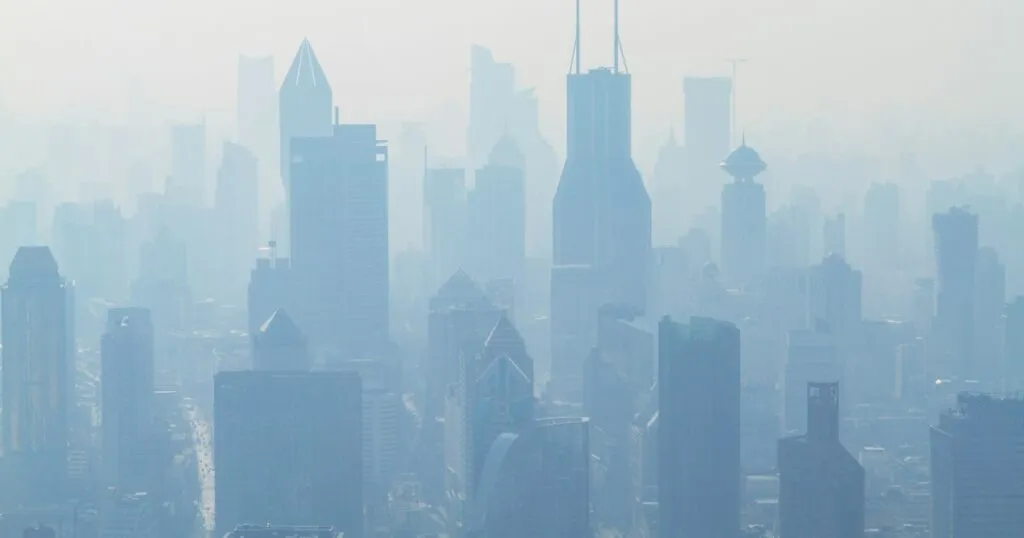
India’s AQI is an index, not a concentration. It converts measurements of several pollutants into a single 0–500 scale and reports the worst one, which in most Indian cities most of the time is PM2.5 — particles small enough to pass deep into the lungs and into the bloodstream.
Two things worth knowing about the numbers you see on apps. First, they often come from a single monitoring station that may be several kilometres away, and local conditions vary enormously — a road junction at 8am and a park two streets away can differ substantially. Second, there is no threshold below which particulate pollution is known to be harmless; the World Health Organization’s guideline values are far below what most Indian cities achieve, so “moderate” on the Indian scale is not the same as “clean”.
How do you improve indoor air?
Start by recognising that indoor air is not simply outdoor air that got inside. It is outdoor air plus whatever you generate indoors — and the indoor sources are often larger than people assume, which is why some homes are worse inside than out.
The kitchen entry at the top surprises people and should not. Frying and tempering spices generates very high particulate concentrations in a confined space, and a great many Indian kitchens either have no extraction or have an exhaust fan nobody switches on. Using it every time you cook is free and is probably the single largest indoor improvement available to most households.
The incense and mosquito coil entry is the one people most resist. A burning mosquito coil in a closed room produces substantial particulate pollution, and coils are typically used overnight in a bedroom — the worst possible combination of duration and proximity. Plug-in vaporisers, nets and screens all avoid the smoke.
Are air purifiers worth it?
For particulate pollution, yes — HEPA filtration genuinely removes PM2.5 from the air passing through it, and this is settled physics rather than marketing. The caveats are about matching the machine to the room and about what else is going on.
- Size it to the room, not the house. Look for the clean-air delivery rate and compare it to the room’s floor area. One purifier cannot treat a flat; it can treat the bedroom it is standing in with the door closed.
- Put it where you spend hours. The bedroom overnight is the highest-value placement for almost everyone, because it is eight uninterrupted hours in one room.
- Close the room. A purifier running with the door and windows open is filtering the outdoors.
- Budget for filters. Replacement filters over three years often cost more than the machine, and a clogged filter does very little. Check the replacement cost before buying.
- Ignore ionisers and ozone generators. HEPA plus activated carbon is what you want. Ozone-generating devices are not recommended for occupied spaces.
A cheaper alternative worth knowing about: a box fan with a HEPA or high-grade filter strapped to it is a well-documented improvised approach that performs surprisingly well for the cost. It is less convenient and less quiet than a purpose-built unit, and for a household that cannot afford a purifier it is considerably better than nothing.
Which masks actually help?
Only properly fitted respirators. A cloth or surgical mask is designed to catch droplets, not fine particles, and it leaks around the edges — which matters because air takes the path of least resistance. For PM2.5 you need an N95, FFP2 or equivalent, and the fit matters as much as the rating.
The third column is the point most often missed. Roadside concentrations during peak traffic are dramatically higher than the same street at off-peak hours, and a route one block away from a main road can be substantially cleaner. Walking or cycling before the morning rush, choosing interior lanes rather than arterial roads, and keeping car windows closed with recirculation on in traffic are all larger effects than mask-wearing, and none of them requires buying anything.
Should you still exercise outdoors?
Usually yes, with adjustments, because the health benefits of regular activity are substantial and giving up exercise is its own harm. Exercise does increase exposure — you breathe several times more air per minute, and more of it through the mouth, bypassing the nose’s filtering — so the adjustment is about timing and intensity rather than abstinence.
- Check the number before you go, not after. Most cities are cleanest in the late morning to afternoon and worst in the early morning and late evening when air is still and traffic is heavy — which is unfortunately when most people exercise.
- Move the hard sessions indoors on bad days. Heavy breathing is what multiplies exposure, so a brisk indoor session beats an outdoor hard one.
- Get away from traffic. A park interior is meaningfully cleaner than its boundary road.
- Be stricter for children and older adults. Children breathe more air relative to body size and are outdoors more.
On severe days, indoors with filtered air is the right answer, and there is plenty you can do there — our 15-minute beginner yoga routine needs no equipment and no outdoor air, and walking indoors in a mall or corridor keeps the habit alive through a bad week.
What is worth doing this week?
- Switch on the kitchen exhaust every time you cook. Free, immediate, largest single indoor gain for most homes.
- Stop burning things indoors. Replace mosquito coils with a plug-in or a net; cut incense in closed rooms.
- Damp mop instead of dry sweeping. Dry sweeping lifts settled dust straight back into the air you breathe.
- Pick your ventilation window. Open up when outdoor air is at its best for your area, close during peak traffic.
- If you buy one purifier, put it in the bedroom and run it with the door closed overnight.
- Shift your walk or run away from peak traffic hours and off arterial roads.
- Keep two N95 masks for severe days and for roadside time you cannot avoid.
None of this is a substitute for the policy changes that would actually clean the air, and it would be dishonest to present personal measures as a solution to a collective problem. What they do is reduce the dose you and your family receive while that larger problem is being argued about, and the first four items on that list cost nothing at all.
If you are putting together a broader picture of daily health, the adjacent pieces are how much walking is enough, sleep hygiene habits that help and simple habits for a healthy lifestyle. For the desk side of the day, see back and neck pain from sitting and screen eye strain. More in our lifestyle section.
Where can I reduce my air pollution exposure most?
Indoors, because exposure is concentration multiplied by time and most people spend most hours inside. Improving the air in the bedroom you sleep in for eight hours matters more than optimising a thirty-minute commute, and the cheapest indoor measures cost nothing.
What does an AQI number actually tell me?
It is an index rather than a concentration: it converts several pollutants onto one 0 to 500 scale and reports the worst, usually PM2.5 in Indian cities. The reading often comes from a station kilometres away, and local conditions vary a lot between a road junction and a nearby park.
What is the biggest indoor source of pollution in Indian homes?
Cooking without extraction. Frying and tempering spices produces very high particulate levels in a confined space, and many kitchens either lack extraction or have an exhaust fan that nobody switches on. Using it every time is free and is usually the largest single improvement available.
Are mosquito coils and incense really a problem?
Yes. Burning a coil in a closed room produces substantial particulate pollution, and coils are typically used overnight in a bedroom, which is the worst combination of duration and proximity. Plug-in vaporisers, nets and window screens avoid the smoke entirely.
Do air purifiers work?
HEPA filtration genuinely removes fine particles from the air passing through it. The caveats are practical: size the unit to one room rather than the house, run it with the door closed, place it where you spend hours such as the bedroom, and check replacement filter costs before buying.
Does a cloth mask protect against PM2.5?
No. Cloth and surgical masks are designed for droplets and leak around the edges, and air takes the path of least resistance. For fine particles you need an N95, FFP2 or equivalent with a proper seal at the nose bridge; facial hair breaks that seal.
Should I stop exercising outdoors when air quality is poor?
Usually adjust rather than stop, since giving up regular activity is its own harm. Move hard sessions indoors on bad days because heavy breathing multiplies exposure, exercise away from arterial roads and peak traffic hours, and be stricter for children, older adults and anyone with asthma.