
Beginner Yoga: A 15-Minute Daily Routine You Can Do at Home

This article gives general information and is not medical advice. If you are worried about your health, speak to a qualified doctor. In India, Tele-MANAS offers a free 24-hour mental health helpline on 14416.
You do not need an hour, special clothing or flexibility to begin. A short daily routine builds the habit, eases stiffness from sitting and helps you unwind. The sequence below uses simple poses with timings. It is general fitness information, not medical advice, and it is best learned with a qualified yoga teacher if you can.
Key takeaways
- Fifteen minutes a day is a realistic start; consistency matters more than depth.
- Move with your breath and stay within a comfortable range.
- Use a folded blanket, cushion or wall for support.
- The WHO recommends at least 150 minutes of moderate activity a week for adults; yoga can be part of that.
What do you need before you start?
- A mat, thick towel or carpet, and a clear floor space.
- Comfortable clothes and a quiet corner.
- An empty stomach or a gap of about two hours after a meal.
- A glass of water nearby. See how much water to drink.
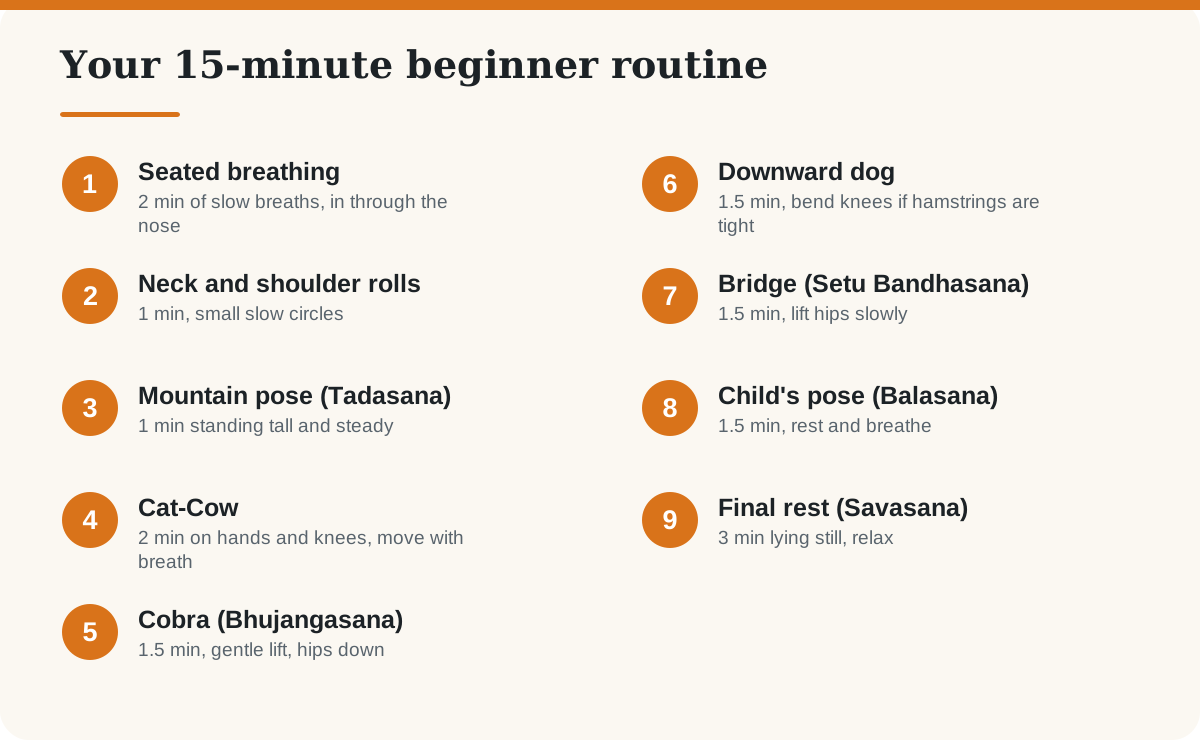
How do you do each pose safely?
| Pose | How | Make it easier |
|---|---|---|
| Tadasana | Feet hip-width, spine tall, shoulders relaxed, breathe evenly | Stand with your back near a wall |
| Cat-Cow | On all fours, inhale to lift the chest, exhale to round the spine | Pad your knees with a folded blanket |
| Cobra | Lie on your stomach, hands under shoulders, lift the chest slightly | Keep elbows bent and lift only a little |
| Downward dog | Hips up and back, hands and feet pressing down | Bend your knees and keep the spine long |
| Bridge | Lie on your back, knees bent, lift the hips | Lift only a few centimetres and hold briefly |
| Child’s pose | Sit back on your heels, fold forward, rest your forehead | Place a cushion between hips and heels |
Who should be careful or ask a doctor first?
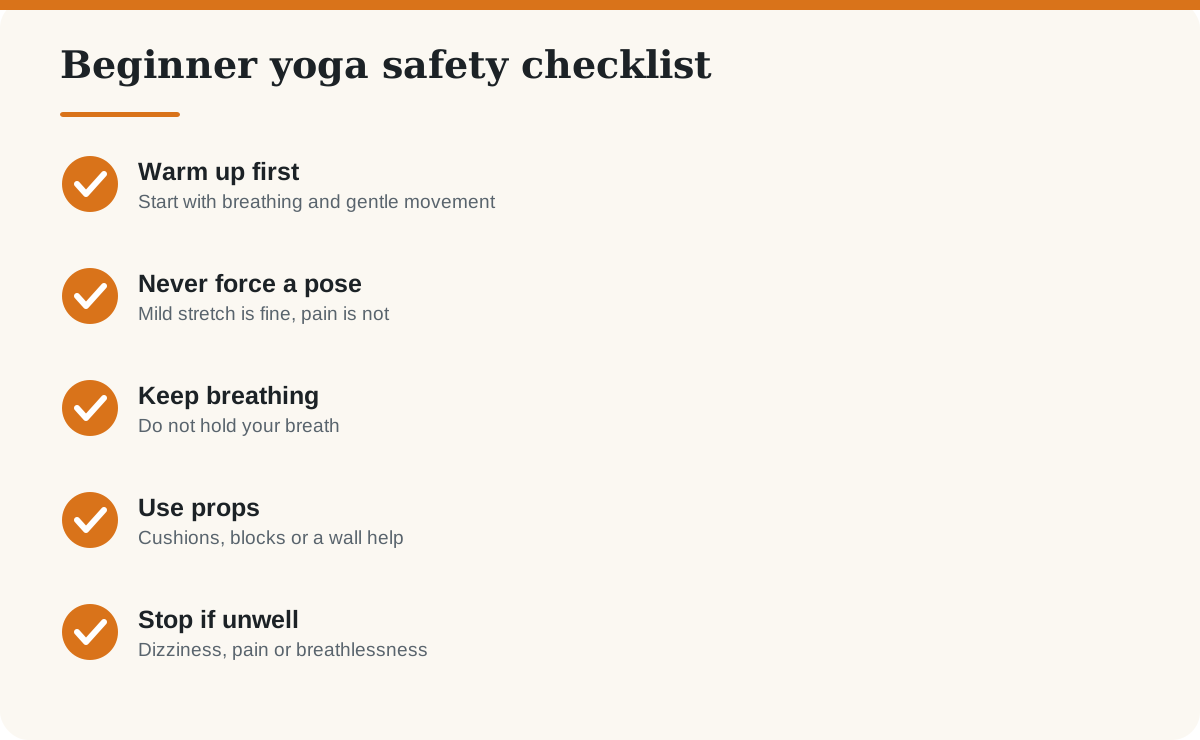
Speak to a doctor or qualified yoga teacher before starting if you are pregnant, have back, neck, knee or wrist problems, high blood pressure, glaucoma, a recent surgery or any long-term condition. Stop and seek advice if you feel sharp pain, dizziness, chest pain or breathlessness. Yoga is not a replacement for medical treatment.
How can you make it a habit?
- Practise at the same time each day, such as right after waking up.
- Roll out the mat the night before so it is ready.
- Track a streak on a calendar, but allow rest days without guilt.
- Pair it with stress and sleep routines: see managing work stress and sleep hygiene tips.
For other everyday health habits, read 10 simple tips for a healthy lifestyle.
Frequently asked questions
Is 15 minutes of yoga a day enough?
For a beginner, yes. A short daily practice builds the habit and can ease stiffness. Over time you can extend it or add other physical activity to reach the WHO guideline of at least 150 minutes of moderate activity a week.
What is the best time of day for yoga?
Early morning on an empty stomach suits many people, but any time that you can do it regularly is fine. Wait about two hours after a meal.
Do I need to be flexible to start yoga?
No. Yoga helps you develop flexibility gradually. Use props and modify poses to match your body.
Can yoga help with stress?
Slow breathing and gentle movement help many people relax. Yoga can be a helpful part of stress management but does not replace medical care.
Can I do yoga during pregnancy?
Only after talking to your doctor, and preferably with a teacher trained in prenatal yoga. Some poses are not suitable.
Will yoga help me lose weight?
It can support an active lifestyle, but weight change depends on overall activity, food and other factors. Do not expect a short routine alone to cause weight loss.
Sources
Last checked: October 2026. This routine is general fitness information, not medical advice. Learn poses from a qualified teacher where possible.