
Can Artificial Intelligence Replace Human Intelligence? Artificial Intelligence vs Human Intelligence
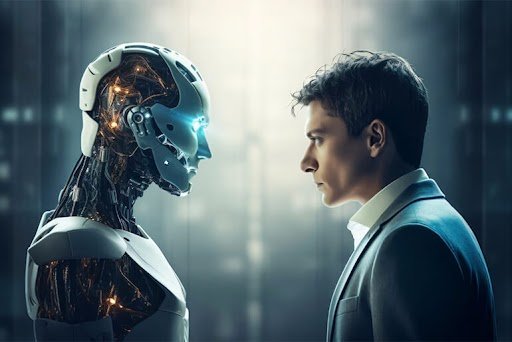
Quick answer: No — artificial intelligence and human intelligence are fundamentally different types of capability, not competing versions of the same thing, so “replacing” isn’t quite the right frame. AI excels at processing large amounts of data quickly, recognising patterns, and automating repetitive tasks. Human intelligence brings creativity, emotional understanding, ethical judgement, and the ability to handle genuinely novel situations AI hasn’t been trained on. The most realistic outlook — shared by most researchers in the field — is that AI augments human capability in specific tasks rather than replacing human judgement wholesale.
Key Takeaways
- AI and human intelligence solve different kinds of problems — comparing them as “better/worse” misses that they’re built for different things.
- AI systems learn from data patterns; they don’t reason from lived experience, ethics, or emotional context the way humans do.
- The most effective real-world applications combine both — AI handling data-heavy or repetitive work, humans handling judgement, empathy, and novel problem-solving.
- Every AI system is ultimately built, trained, and directed by humans, which is why “AI vs. human intelligence” is better understood as a partnership than a competition.
What Is Artificial Intelligence, Really?
Artificial intelligence refers to computer systems designed to perform tasks that typically require human intelligence — recognising patterns in data, understanding language, making predictions, or automating decisions based on learned rules. Modern AI, including large language models, learns these patterns from massive datasets during training rather than being explicitly programmed with step-by-step instructions for every scenario. This is why AI can generalise reasonably well to new but similar situations — but it’s also why it can fail unpredictably on situations genuinely outside its training experience.
How AI and Human Intelligence Actually Differ
| Capability | Artificial Intelligence | Human Intelligence |
|---|---|---|
| Processing large data volumes | Very strong — near-instant analysis of huge datasets | Limited by time and cognitive load |
| Pattern recognition at scale | Very strong, especially in well-defined domains | Good, but slower and less consistent at scale |
| Creativity and original ideas | Can remix and recombine learned patterns, but doesn’t originate ideas from lived experience | Strong — grounded in lived experience, culture, and emotion |
| Emotional understanding and empathy | Can recognise emotional language patterns, but doesn’t genuinely feel or experience emotion | Strong — genuine emotional experience and empathy |
| Ethical judgement in novel situations | Limited to the values and rules reflected in its training; can’t reason from first principles the way humans can | Strong — capable of weighing genuinely new ethical dilemmas |
| Consistency and fatigue | Doesn’t tire or lose focus | Subject to fatigue, mood, and attention limits |
Where AI and Human Intelligence Work Well Together
The most compelling real-world examples aren’t about AI replacing humans — they’re about combining strengths. In healthcare, AI algorithms can help analyse medical imaging or lab data faster than manual review alone, flagging patterns for a doctor to examine — but the doctor still makes the diagnosis, discusses it with the patient, and provides the emotional support and contextual judgement AI can’t replicate. In finance, AI-powered analysis can process market data at a scale no human could match, while human investment managers weigh that analysis against client goals, risk tolerance, and market psychology.

A simple way to think about the division of labour: humans set direction and make judgement calls (the “controller”), AI processes information and surfaces insights or drafts (the “transmitter”), and in some cases automated systems execute repetitive physical or digital tasks (the “executor”). Even a task as simple as asking an AI for a recipe illustrates the limit — the AI can generate the recipe, but a human still has to actually cook the meal, taste it, and adjust it.
Legitimate Concerns Worth Taking Seriously
It would be dishonest to wave away real concerns about AI’s growing role: job displacement in roles built around tasks AI now automates, questions about accountability when AI-assisted decisions go wrong, and the risk of over-relying on AI outputs without adequate human review. These are genuine tensions, not fringe worries — and they’re best addressed by building AI into workflows deliberately (with human review at the right points) rather than either dismissing the risk or refusing to engage with the technology at all.

So, Can AI Replace Human Intelligence?
Not in any meaningful sense today, and not for the foreseeable future in domains requiring genuine judgement, ethics, or emotional understanding. AI is a product of human intelligence — every model is designed, trained, and directed by people, and it reflects the strengths and limitations of the data and choices humans build into it. Rather than framing this as a contest, the more useful question for individuals and businesses is: which specific tasks benefit from AI’s speed and scale, and which genuinely need human judgement — and how do you combine both deliberately rather than defaulting to one or the other out of habit?
“The question is not whether intelligent machines can have any emotions, but whether machines can be intelligent without any emotions?”
— Marvin Minsky
Frequently Asked Questions
-
What is the definition of Artificial Intelligence (AI)?
Artificial Intelligence refers to computer systems designed to perform tasks that typically require human intelligence, such as recognising patterns, understanding language, and making predictions, learned from data during training.
How does artificial intelligence differ from human intelligence?
AI processes patterns learned from data and applies them at scale and speed, while human intelligence involves lived experience, genuine emotion, creativity, and ethical reasoning that AI cannot replicate.
Can AI replace human intelligence?
Not in any meaningful sense for tasks requiring judgement, ethics, or genuine emotional understanding. AI can automate and accelerate specific tasks, but human oversight and decision-making remain essential, especially for novel or high-stakes situations.
What are the benefits of combining AI with human intelligence?
Combining both can lead to better outcomes than either alone — for example, AI analysing medical data quickly while doctors provide diagnosis, context, and patient care, or AI processing market data while human advisors weigh client-specific factors.
What are common concerns about AI replacing human roles?
Legitimate concerns include job displacement in automatable roles, unclear accountability when AI-assisted decisions go wrong, and over-reliance on AI outputs without adequate human review.
What is the role of human intelligence in AI development?
Human intelligence is essential to designing, training, and directing every AI system — the data it learns from, the objectives it’s optimised for, and the guardrails around its use are all human decisions.
How can AI and human intelligence work together in practical scenarios?
In healthcare, AI can flag patterns in medical data for a doctor to review and act on. In finance, AI can process market data at scale while human advisors apply judgement about client goals and risk tolerance.
How do humans and machines contribute differently to problem-solving?
Machines excel at speed, data analysis, and consistent execution of well-defined tasks, while humans bring creativity, emotional understanding, ethical reasoning, and the ability to handle genuinely novel situations.
Why is collaboration between humans and AI considered the more realistic path forward?
Collaboration lets AI support human decision-making with speed and scale, rather than framing the relationship as a competition — organisations that deliberately combine both tend to make more responsible and effective decisions than relying on either alone.