
Warli Art for Beginners: Meaning, Motifs and a Step-by-Step Drawing Guide

Warli art is one of the easiest Indian folk art forms to start, because its visual language is only a few shapes. But it also carries a deep link to nature and community life. This guide covers its background, what each shape represents, traditional and modern materials and a step-by-step first drawing. It is a good project for children and adults. Compare it with Madhubani painting, which is richer in colour and pattern.
Key takeaways
- The Warli community lives on the northern edge of the Sahyadri range in Maharashtra, with Dahanu and Jawhar well known.
- Traditional paintings are white on earthen walls, made with rice paste.
- Warli art shows daily life and nature, not mythological characters or deities.
- You can start with a white gel pen on dark paper.
What is Warli art and where is it from?
Warli painting is a tribal art of Maharashtra, practised by the Warli community. The Warlis live mainly in the Thane and Palghar districts, and the art is also found in parts of Gujarat and the Dadra and Nagar Haveli and Daman and Diu region. Paintings traditionally decorate the walls of mud houses, and they celebrate farming, dancing, hunting, festivals and the cycle of life.
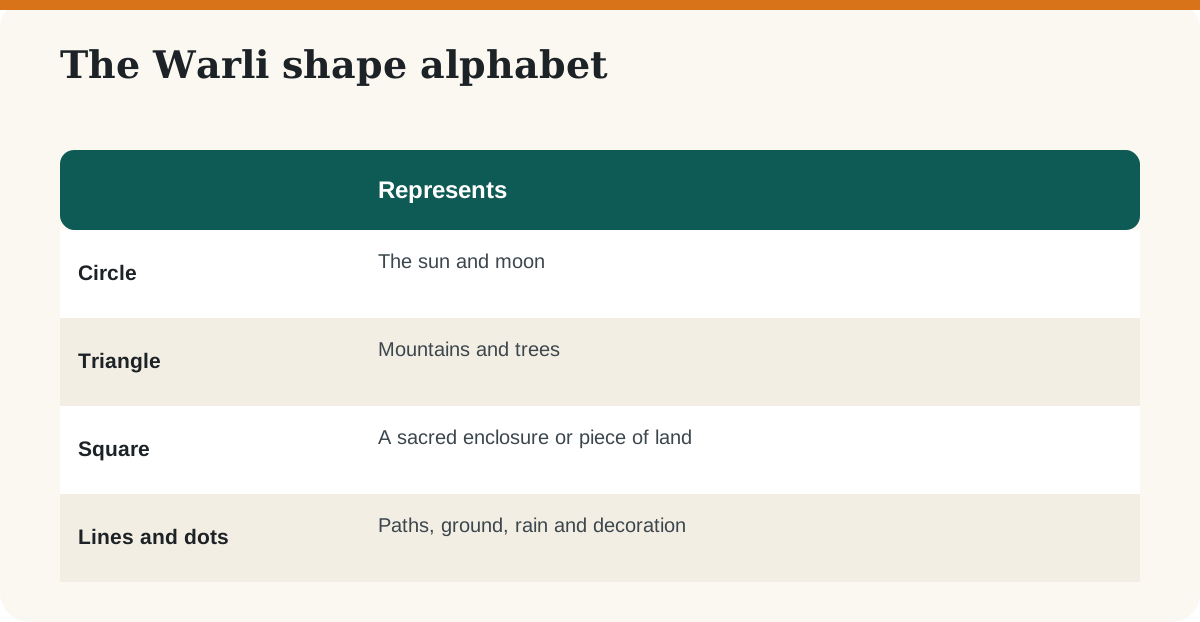
What do the shapes mean?
What materials do you need?
| Traditional | Modern beginner kit |
|---|---|
| Wall coated with earth or cow-dung paste | Brown, terracotta, black or deep red paper or canvas |
| Rice paste for white | White gel pen, poster paint or acrylic |
| Chewed or crushed bamboo stick as brush | Fine brush, nib or pen |
How do you draw a Warli figure and village scene?
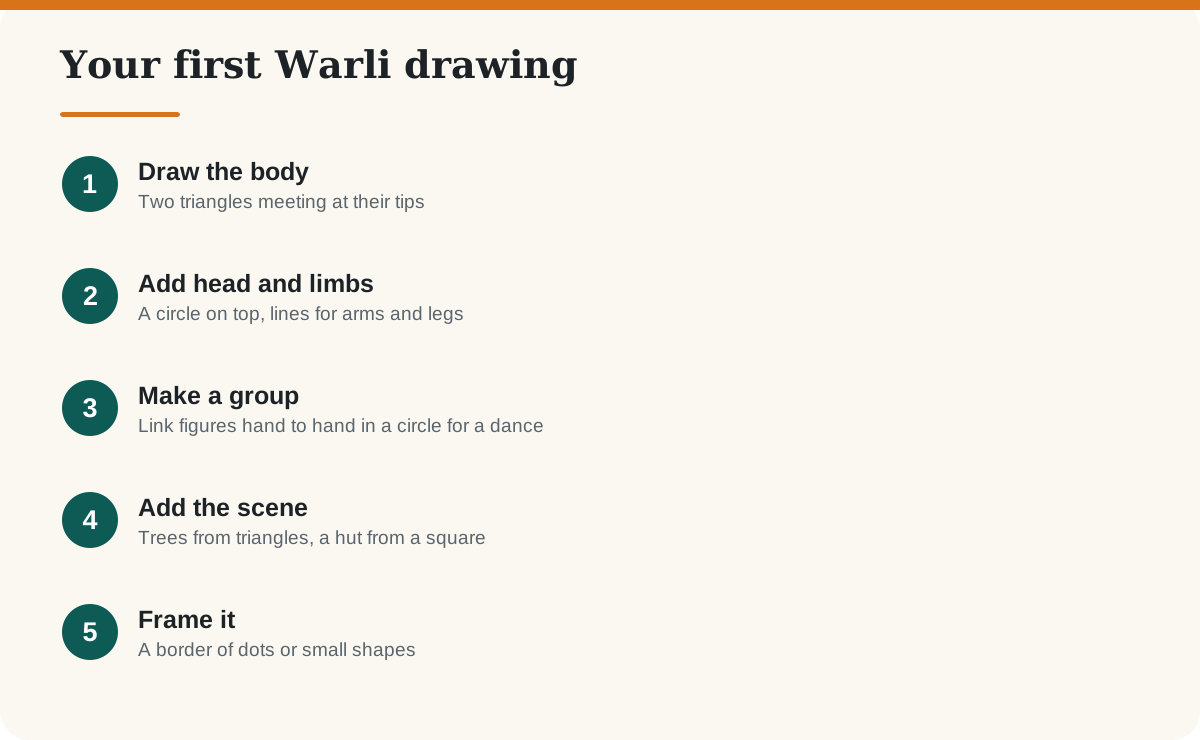
A dance circle with figures holding hands around a central point is a classic composition. Add details like a hut, a tree, a farmer with a plough, birds and animals. Keep the background dark and leave room between elements. Avoid crowding the page.
Tips for children and classrooms
- Let kids practise the shapes first on scrap paper.
- Make a scene about their own day: school, playground, market.
- Use washable paints and cover tables.
- Explain that this is a living tradition. Credit the Warli community.
How do you respect the tradition?
If you sell Warli-inspired work, say it is inspired by the tradition and never claim it is made by Warli artists unless it is. Buy from tribal artists or reliable cooperatives when you want authentic pieces. Learn about selling your own art in our guides on selling paintings online and selling art on Instagram. Warli patterns also work as home decor; see Diwali decoration ideas.
Frequently asked questions
What is Warli art?
Warli art is a tribal painting tradition of the Warli community in Maharashtra, using simple shapes in white to depict daily life, nature, farming and festivals.
Which shapes are used in Warli art?
Circles, triangles and squares. Circles are commonly said to represent the sun and moon, triangles mountains and trees, and squares a sacred enclosure or land.
What colour is Warli art?
Traditionally white rice paste on an earthen background. Modern work may use other colours, but white on a dark base is the classic look.
Does Warli art show gods and goddesses?
Traditional Warli art focuses on village life and nature and does not depict mythological characters or deities.
How can a beginner start Warli art?
Use a white pen or paint on dark paper, practise the basic shapes, draw figures with two triangles and a circle, and add a simple scene.
Where is Warli art practised?
Mainly in Thane and Palghar districts of Maharashtra, with Dahanu and Jawhar prominent, and in nearby parts of Gujarat and the Dadra and Nagar Haveli and Daman and Diu region.
Sources
Last checked: October 2026. Symbol meanings are commonly described interpretations and may vary by community and artist.