
Madhubani Painting: History, Five Styles, Materials and How to Start

Madhubani painting is instantly recognisable: double-line borders, flat colours and every inch of space filled with flowers, birds or geometric patterns. Behind the beauty is a living tradition tied to festivals, weddings and daily life. This guide explains where it comes from, what the main styles mean, how it was traditionally made and how you can try it yourself.
Key takeaways
- The art is from the Mithila region, with Madhubani district in Bihar as its main centre.
- It began on mud walls and floors; paper and canvas became common from the 1960s.
- Traditional colours came from natural sources such as turmeric, indigo, lampblack and rice paste.
- Madhubani painting has Geographical Indication (GI) status, which helps protect its origin.
Where does Madhubani painting come from?
It comes from the Mithila region of Bihar, with some of the practice in Nepal. The villages of Jitwarpur, Ranti and Rasidpur are notable centres. Women passed the skill down through families, painting on walls and floors for festivals and weddings. A popular story links the art to the wedding of Sita and King Janak, but this is legend, not documented history. In the 1960s, painting on paper and canvas began to give women an income and carried the art to wider audiences.
What are the five Madhubani styles?
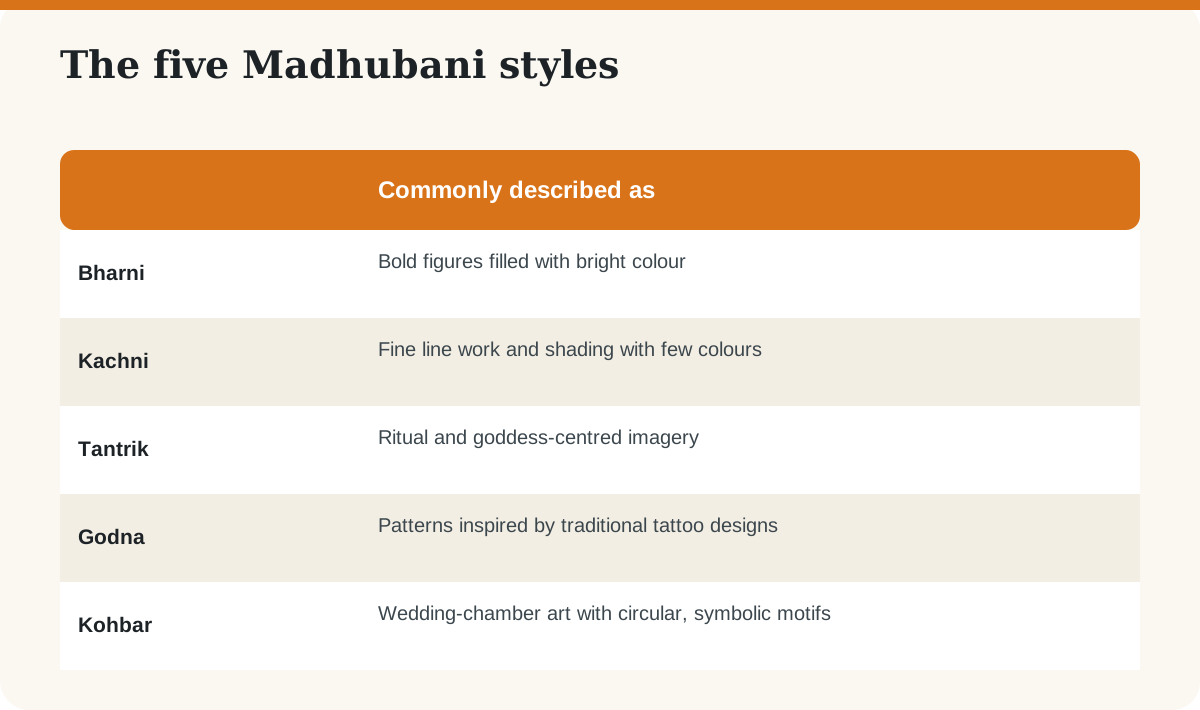
Kohbar is traditionally painted in the wedding chamber and is known for circular motifs, often in red and black. Different villages and families have their own preferences, so treat these labels as a guide, not hard rules.
What materials were used traditionally?
| Colour | Traditional source |
|---|---|
| Red | Vermilion mixed with mustard seed, or red clay |
| Black | Lampblack |
| White | Rice paste |
| Yellow | Turmeric |
| Blue | Indigo |
| Orange | Palash flower |
| Green | Bilva leaf |
Artists used bamboo slivers, twigs, rags and fingers as brushes, and gum arabic or goat’s milk as binders. Chemical pigments became available in the 1940s. Today many artists use acrylic or poster colours and nib pens, especially on paper and canvas.
What do the motifs mean?
- Sun and moon: life, time and cosmic order.
- Fish, birds and peacocks: fertility, love and auspiciousness, often in wedding art.
- Tulsi plant, lotus and trees: sacredness, purity and nature.
- Deities and epic scenes: stories from the Ramayana, Mahabharata and local traditions.
Meanings can differ between families and regions, and the articles that give a single “official” meaning for every motif are simplifying.
How can a beginner try Madhubani painting?
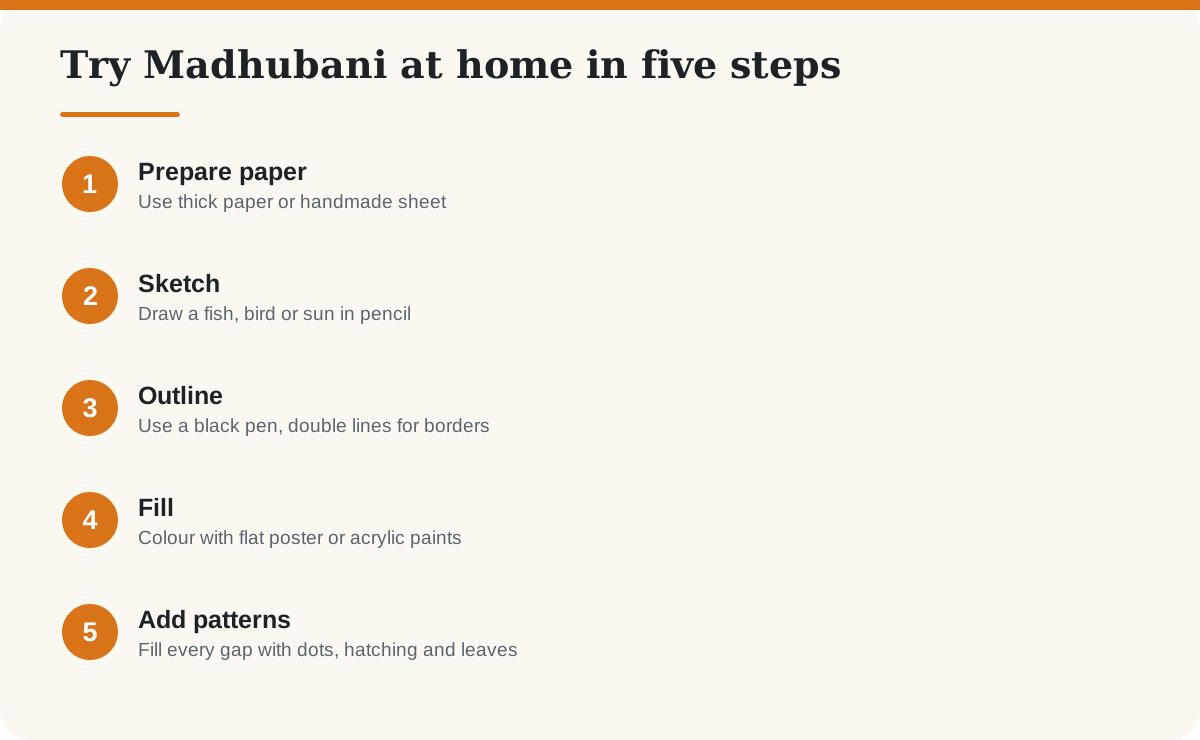
How do you buy authentic Madhubani art?
- Buy from artists, cooperatives or trusted craft organisations where possible.
- Ask whether the work is hand-painted. Printed copies are not handmade art.
- Look for details: irregular, hand-drawn lines and natural variation.
- Pay fair prices; low prices may mean prints or unfair artist pay.
Read our guide on buying original paintings online. If you paint and want to sell your work, see selling paintings online and how to sell art on Instagram in India. For another tribal tradition, read Warli art for beginners.
Frequently asked questions
What is Madhubani painting?
Madhubani, or Mithila, painting is a folk art from Bihar’s Mithila region known for bold outlines, flat colours, intricate patterns and motifs from nature, ritual and epics.
What are the five styles of Madhubani painting?
They are commonly described as Bharni, Kachni, Tantrik, Godna and Kohbar.
What colours are used in Madhubani painting?
Traditional colours came from natural sources such as turmeric, indigo, lampblack, rice paste, flowers and leaves. Many artists now use acrylic or poster colours.
Does Madhubani painting have a GI tag?
Yes. Madhubani painting has Geographical Indication status, which recognises its link to the Mithila region.
Who traditionally made Madhubani paintings?
Women of the Mithila region traditionally made them on walls and floors, passing the skill through families. Today men and women from many communities practise the art.
How can I tell if a Madhubani painting is handmade?
Look for slightly irregular hand-drawn lines and texture on paper or cloth. Ask the seller about the artist and source. Printed copies look uniform.
Sources
Last checked: October 2026. Folk traditions vary by family and village; this guide simplifies a living art form.