How to Spot AI-Generated Text (and Why AI Detectors Often Get It Wrong)
Teachers, editors, hiring managers and website owners all want to know whether a piece of writing came from a person or a chatbot. The honest answer is that nobody can be sure from the text alone. This guide explains the signs that are worth noticing, what research says about AI detectors, and a better question to ask: is this text accurate, useful and honest about its sources? If you publish content yourself, read our guide to AI-generated content too.
Key takeaways
- Signs of AI writing are hints, not proof. Careful human writers can show the same patterns.
- A Stanford-led study found detectors wrongly flagged many essays by non-native English speakers as AI-written.
- OpenAI withdrew its own AI text classifier because of its low accuracy.
- Check facts, sources and authorship instead of relying on a percentage score.
What are the common signs of AI-generated text?
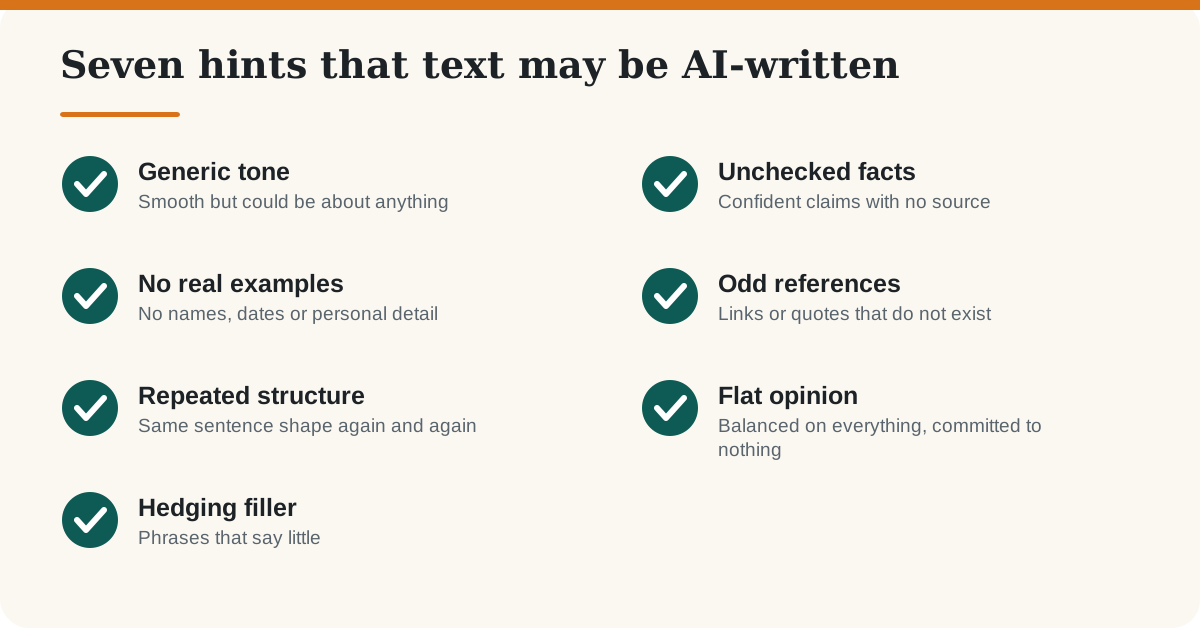
The strongest signal is not style but substance. Ask: does the text include first-hand experience, specific numbers with sources, local detail, or an original point of view? AI can imitate these, but unedited AI text often lacks them. Another useful check is to verify every statistic, quote and link, because chatbots can invent references that look real.
Why are AI detectors unreliable?
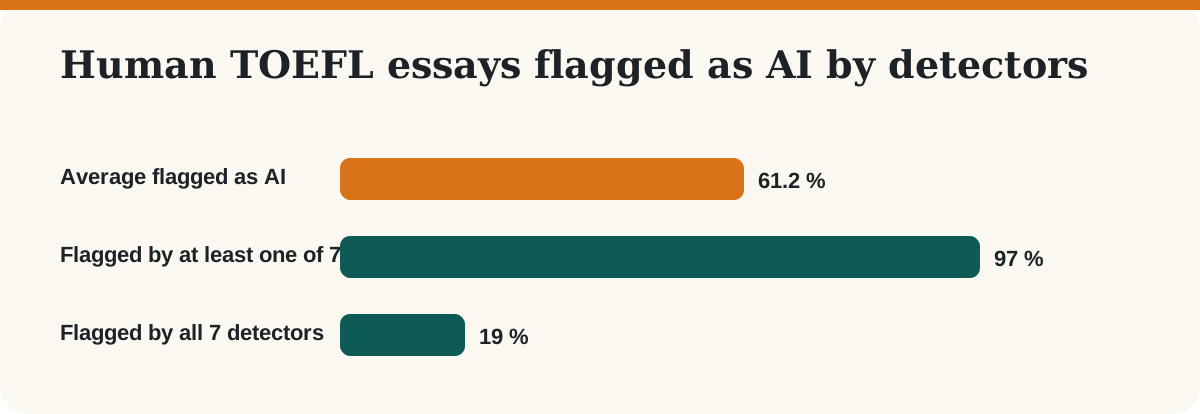
Detectors guess based on statistical patterns, and simple writing looks “machine-like” to them. Researchers at Stanford tested seven popular detectors on essays written by non-native English speakers (TOEFL essays). The detectors were near-perfect on essays by US-born eighth graders but misclassified more than half of the TOEFL essays as AI-generated. Separately, OpenAI shut down its own AI text classifier, citing its low accuracy rate.
This matters in India, where many students, freelancers and job seekers write in English as a second or third language. A false accusation can cost a grade, a client or a job. The study’s authors recommend avoiding detectors in educational settings where non-native speakers are involved.
How can you check content fairly?
| Check | How to do it | What it tells you |
|---|---|---|
| Facts and links | Open every source and confirm the claim | Accuracy, whoever wrote it |
| Version history | Ask for Google Docs history or drafts | Whether the work developed over time |
| Conversation | Ask the author to explain a paragraph in their own words | Whether they understand it |
| Earlier writing | Compare with their past work | Consistency of voice |
| Originality tools | Check for copied text | Plagiarism, which is a different problem from AI use |
What should website owners and editors do?
Google says it does not ban AI-assisted content, but it does target mass-produced pages made mainly to manipulate rankings. So the goal is quality control, not AI hunting. Require named authors, sources, first-hand detail and a human edit. If you use AI for drafts, learn to write better prompts and review everything before publishing. See also what Google considers in 2026.
Frequently asked questions
Can you tell if something was written by ChatGPT?
Not reliably. You can notice hints such as generic wording and missing detail, but none is proof. Verification of facts and sources is a better test.
Are AI detectors accurate?
They are not dependable enough to be the only evidence. Research has shown false positives, particularly for non-native English writers, and OpenAI withdrew its own classifier because of low accuracy.
Why do AI detectors flag human writing?
Many detectors score how predictable the wording is. Simple, clear writing can look predictable, so it may be flagged even when a person wrote it.
Does Google penalise AI-generated content?
Google says AI-assisted content is not automatically penalised. Content created mainly to manipulate search rankings, at scale and with little value, can violate its spam policies.
What should a teacher do if they suspect AI use?
Talk to the student, look at drafts and version history, and ask them to explain their work. Avoid relying on a detector score alone.
Is using AI to help with writing wrong?
It depends on the rules of your school, employer or client. Where AI is allowed, be transparent about it and take responsibility for checking the facts.
Sources
- Stanford HAI: AI detectors biased against non-native English writers
- Liang et al.: GPT detectors are biased against non-native English writers (arXiv)
- AI Business: OpenAI quietly shuts AI plagiarism detector tool
- Google Search Central: Spam policies
Last checked: October 2026. Detector tools change; the research cited here dates from 2023, so test any tool yourself before relying on it.