
What is ChatGPT? and why is everyone talking about it?
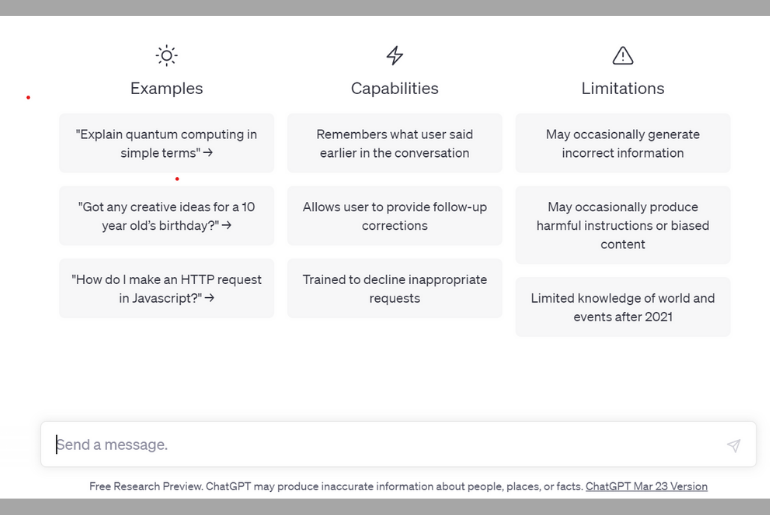
Quick answer: ChatGPT is a conversational AI chatbot built by OpenAI on its GPT (Generative Pre-trained Transformer) family of language models. It generates human-like text responses to questions and instructions, and can help with writing, research, coding, brainstorming, and more. It became widely popular after its November 2022 public launch because of how natural and capable its responses felt compared to earlier chatbots, and it has continued to evolve significantly since then with newer, more capable model versions, image and voice input, web browsing, and more.
What Is ChatGPT?
ChatGPT is an AI-based conversational assistant developed by OpenAI, one of the leading AI research organisations. “GPT” stands for Generative Pre-trained Transformer, referring to the neural network architecture the underlying models are built on. ChatGPT is a version of this technology specifically fine-tuned for natural, back-and-forth conversation — handling tasks like answering questions, explaining concepts, drafting content, translating text, and helping with code.
The underlying models are trained on huge amounts of text using unsupervised learning, meaning they aren’t explicitly programmed with rules for every task — instead, they learn patterns and relationships in language during training. OpenAI then fine-tunes the model specifically for conversational use, including techniques like reinforcement learning from human feedback, to make responses more helpful, accurate, and aligned with what users actually need.
Why Did ChatGPT Become So Popular?

1. Natural, Human-Like Conversation
ChatGPT can hold a genuinely natural back-and-forth conversation, remembering context from earlier in the chat and adjusting its responses accordingly. This felt like a significant leap from earlier, more rigid chatbots that could only handle scripted, narrow interactions.
2. Broad, General-Purpose Capability
Unlike a chatbot built for one narrow task (like scheduling appointments), ChatGPT can help with an unusually wide range of tasks — writing, summarising, coding, brainstorming, analysis, and more — without needing to be reconfigured for each one. This general-purpose flexibility is a big part of why it spread so quickly across different professions and use cases.
3. Accessible to Everyone, Not Just Developers
OpenAI made ChatGPT available through a simple chat interface anyone could use for free, rather than requiring technical knowledge or API integration. Developers who want to build ChatGPT’s capabilities into their own products can also access the underlying models through OpenAI’s API — though it’s important to note the model itself is not open-source; the code and model weights are not publicly released the way genuinely open-source software is.
4. Wide-Ranging Practical Applications
ChatGPT is used across customer service, education, software development, content creation, and more. Businesses use it to draft support responses, marketing copy, and internal documentation; individuals use it to learn new topics, get writing feedback, or plan projects.
How Does ChatGPT Actually Work?
ChatGPT is built on the Transformer neural network architecture, which uses “attention mechanisms” to weigh which parts of the input text are most relevant when generating a response. In simple terms:
- Your message (and the conversation history) is broken down into tokens (word or sub-word pieces).
- The model uses attention layers to understand how each token relates to the others and to the overall context.
- It generates a response one token at a time, with each new token informed by everything generated so far — a process called autoregression.
- During training, the model also learns by predicting deliberately hidden (“masked”) words in text, which helps it build a strong internal sense of language patterns and relationships.
Because it generates responses based on learned patterns rather than looking up facts from a database, ChatGPT can occasionally produce incorrect or outdated information stated confidently — a known limitation often called “hallucination.” It’s good practice to verify important facts, figures, or citations it gives you, especially for anything consequential.
What Can You Actually Use It For?
See our detailed breakdown of everything you can do with ChatGPT for practical use cases across writing, coding, learning, and business tasks — and our guide on top AI marketing tools if you’re evaluating it alongside other AI tools for your business.
Frequently Asked Questions
What is ChatGPT?
ChatGPT is an AI conversational assistant developed by OpenAI, built on the GPT (Generative Pre-trained Transformer) family of language models. It’s designed to handle natural language tasks such as answering questions, drafting content, translating text, and holding contextual conversations.
How does ChatGPT work?
ChatGPT uses a neural network architecture called the Transformer. It processes text through attention-based layers to understand context, then generates responses one word (token) at a time, using techniques like autoregression and masked language modelling learned during training.
Why is ChatGPT considered advanced compared to earlier chatbots?
ChatGPT can generate more natural, contextually appropriate responses because it’s trained on a very large amount of text data using a sophisticated neural network architecture, allowing it to handle far more varied and complex conversations than earlier rule-based chatbots.
What makes ChatGPT different from a traditional scripted chatbot?
Traditional chatbots typically follow pre-written scripts and can only handle a narrow set of anticipated inputs. ChatGPT learns general language patterns from vast amounts of text, allowing it to respond flexibly to a much wider range of questions and conversation styles.
What are the potential applications of ChatGPT?
ChatGPT is used for customer service support, educational tutoring, content drafting, coding assistance, brainstorming, and general research help, among many other use cases across most industries.
Is ChatGPT open-source?
No. ChatGPT is not open-source — OpenAI does not publicly release the model’s code or weights. Developers can access ChatGPT’s underlying models through OpenAI’s paid API to build it into their own applications, but that is different from the model being open-source.
How does ChatGPT improve its response accuracy over time?
OpenAI periodically releases updated model versions with improved training, and also fine-tunes models using human feedback on response quality. Even so, ChatGPT can still occasionally produce incorrect information confidently, so important facts should be verified independently.
Can ChatGPT be customised for specific business use cases?
Yes — businesses can use OpenAI’s API, custom instructions, or Custom GPTs to tailor ChatGPT’s behaviour and knowledge for specific use cases like customer support or internal documentation assistants.
What limitations should I be aware of when using ChatGPT?
ChatGPT can produce factually incorrect statements confidently (hallucination), may not reflect the very latest real-world events without browsing enabled, and should not be relied on alone for medical, legal, or financial decisions.
Does ChatGPT know about very recent events?
By default, ChatGPT’s core knowledge has a training cutoff date and won’t include events after that point unless it has live web browsing enabled in the specific product you’re using. Always check whether browsing/search is active if you need up-to-date information.